
On Lovable
I actually haven't met a single Lovable user

Hey everyone - I’m writing this post from a lovely day in Istanbul. Long flights always get me in the mood to write - or maybe it's the spring. 🌞
I work in a tech startup in New York, our team is almost all engineers and the ones that are not, are certainly very tech-savvy. Last week during our lunch conversations we were talking about Lovable. Out of the 10 of us, only 1 person knew someone who is using it.
That feels pretty off. Lovable is reportedly one of the fastest-growing software companies.
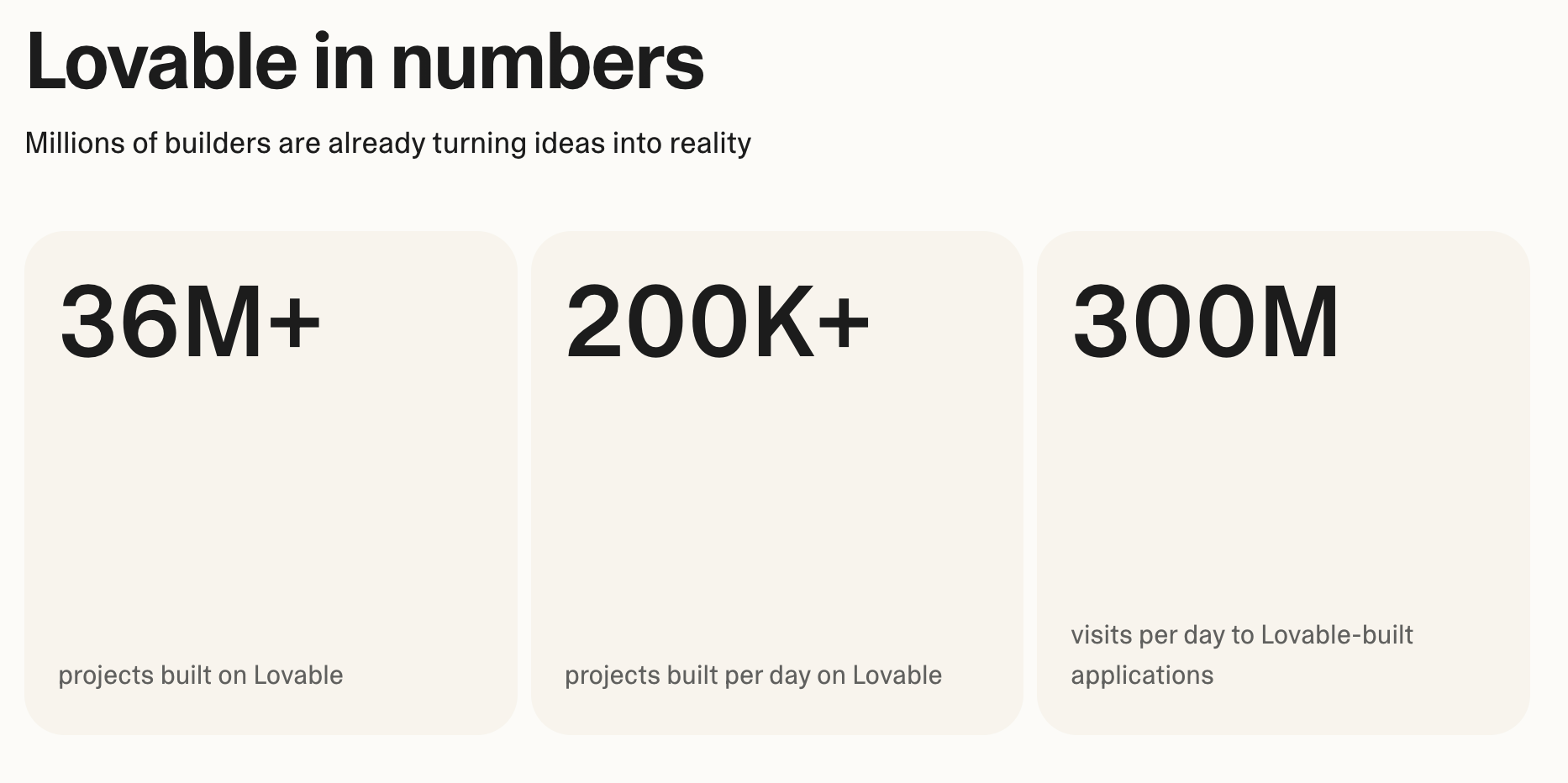
So either we’re missing something, or there’s something pretty impressive going on with how they grew. Probably both.
But first - what is lovable?
Chances are you’ve heard of it. I vaguely remember trying it in the early days but hadn’t looked closely since, so needed a quick refresher.
Lovable is an AI app builder. You describe what you want to build in plain English, and it builds it. No coding required.
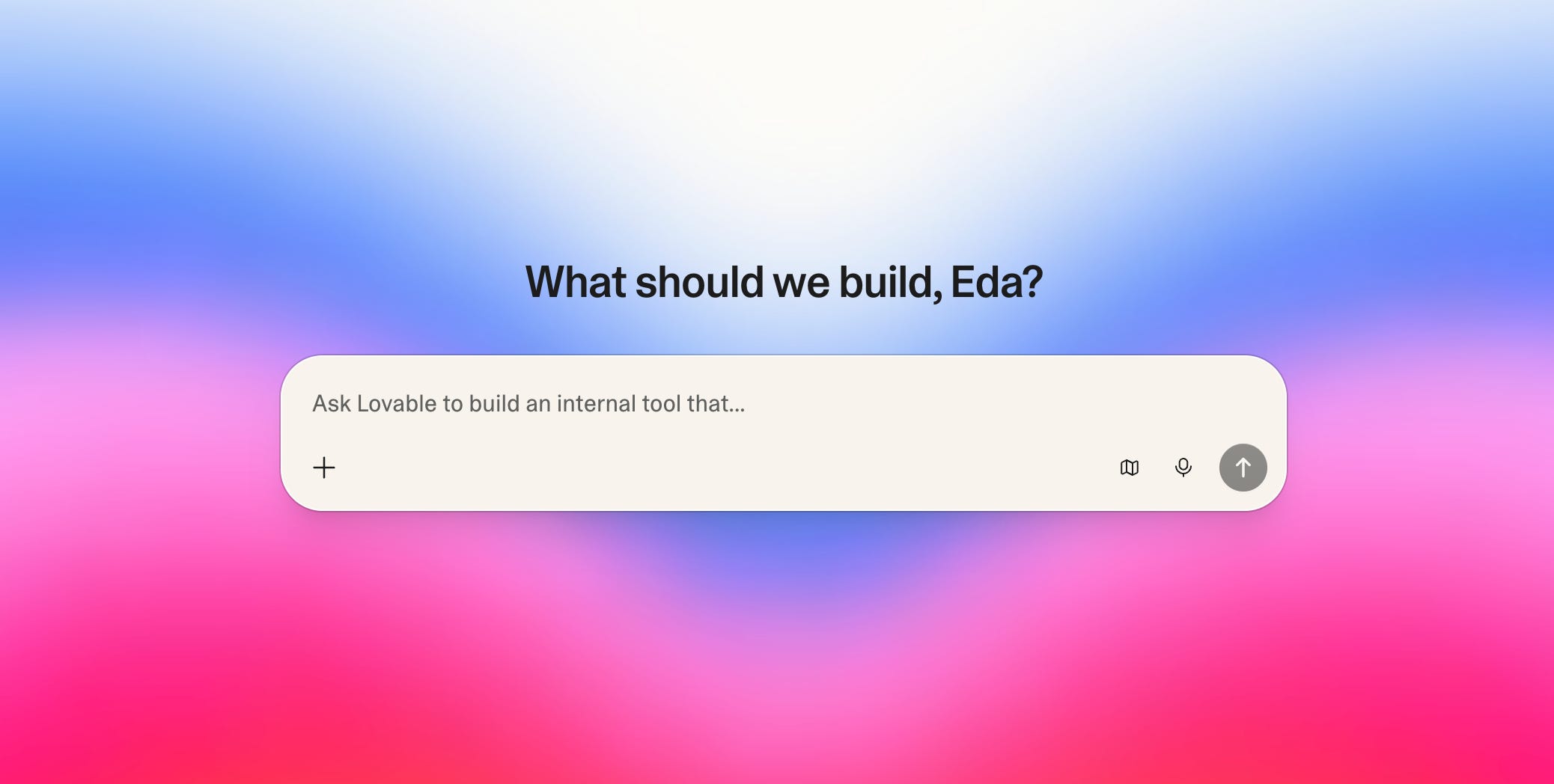
Some (obvious yet) cool call-outs:
It runs on Claude and generates React + Tailwind CSS on the frontend with Supabase handling the backend (database, authentication, file storage).
It has a wide set of integrations such as: Stripe, Shopify, ElevenLabs, Telegram, Twitch.
Free tier (5 credits a day, enough to experiment) and then $25/month for Pro, $50/month for Business.
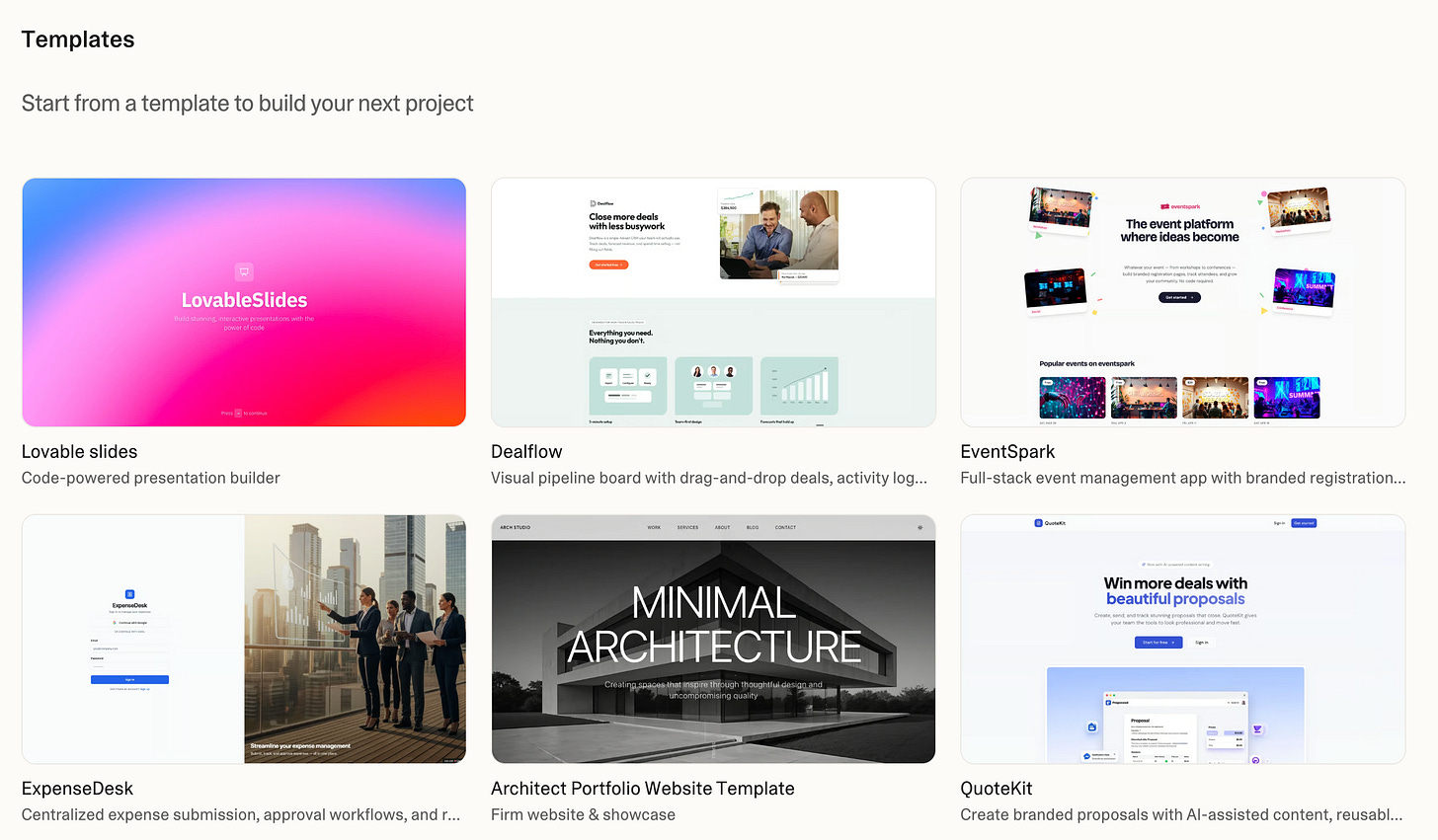
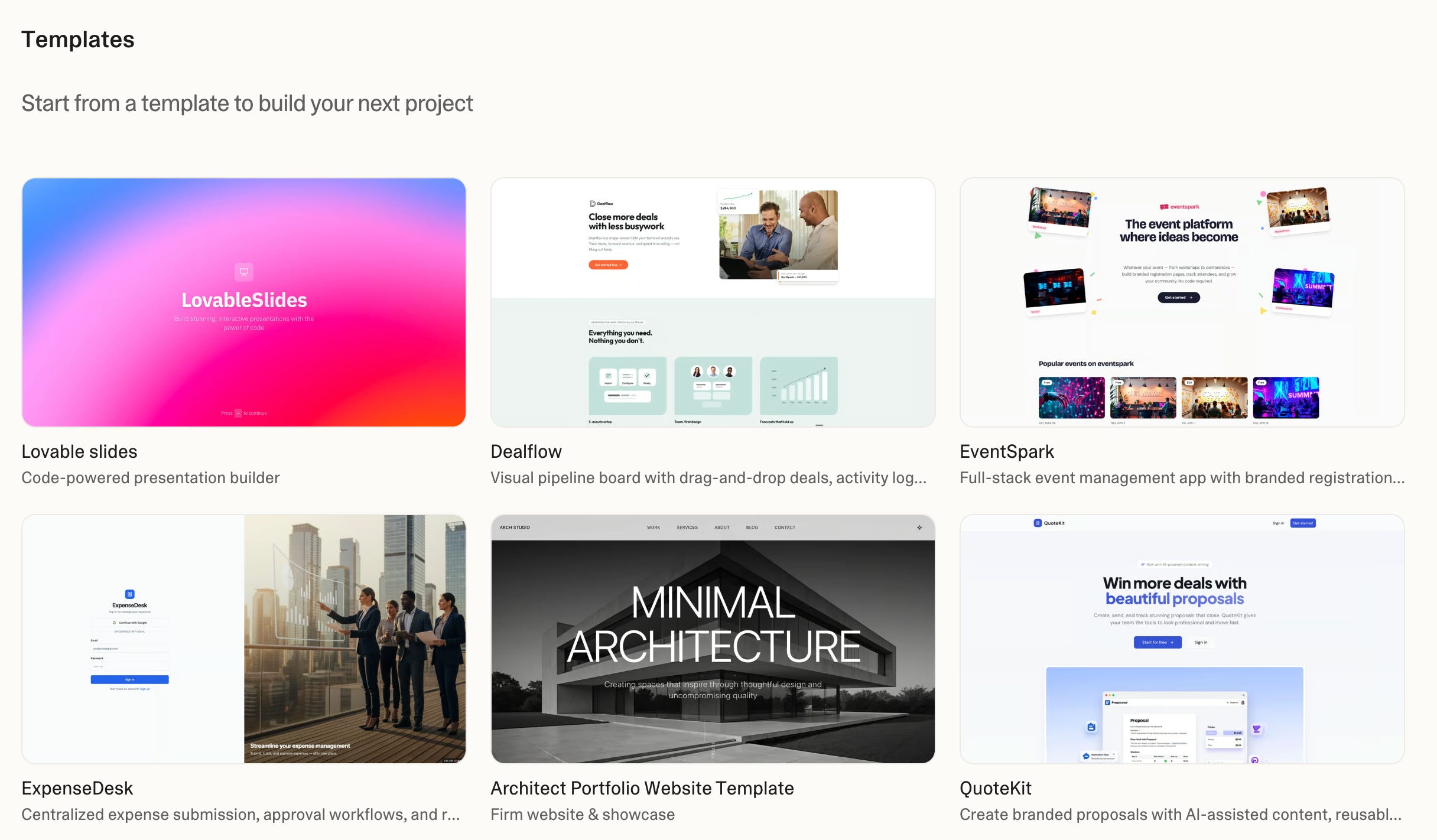
They have a set of templates which makes it easier to bootstrap projects, such as a personal website, a blog, e-commerce website, even building slides & more.
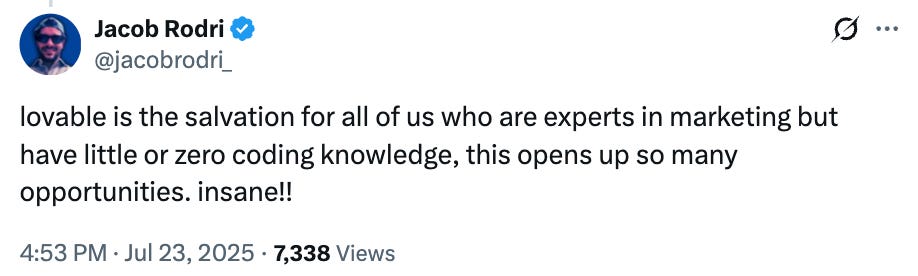
The product is primarily NOT for engineers.
This sounds simple but it makes a huge difference on how the product is built. By targeting non-technical users - founders, PMs, designers, people with ideas and no dev experience - they are going after a much larger market than Claude Code or Codex.
The product decisions flow from that too: user experience > technical capabilities. Focus on ease of use, plain English, fast one-click deployment.

The ‘‘growth playbook’’
I don’t know if its cringe or not to use the term growth playbook. Since I’m not %100 certain it is, i’m using it.
Ok so - $0 to $400M ARR in like 14 months. How?
1. Distribution first, product second
This is no longer a hot take.
But before, the product development cycle would be: build product → find product-market fit → scale. In the age of social media, there are so many cases in which the reverse happens as it with Lovable.
Anton built GPT Engineer as an open-source project in June 2023 and it got +50k GitHub stars and built a decent following, much before a single paying customer. They then launched the product in November 2024 and the distribution converted fast.

2. Founder and employee-led building in public
The founder is one of the main distribution channels - Anton Osika is extremely online and is very good at it.

It’s actually not just Anton, the whole team is encouraged to share. Its one thing that a post comes from the Lovable account, but so much more relatable when its a real human posting.


3. Ship now, fix later
There were quite a few complaints about bugs early on. Not ideal - but in a space moving this fast, waiting for "perfect" is just a bad idea. They shipped while they had paying customers, and continued to improve in public.

Worth noting: this only works because Lovable isn't mission-critical software. Lower stakes = more room to iterate in public.
4. Product is built for self-distribution
I spend a decent amount of time on Twitter and even though I had never used the product (before writing this post), I still had seen quite a few people who are not on the Lovable team share the apps they built and get thousands of views.
It’s kind of cool to have people be able to build something —> get excited —> share with the world without working directly on the team.


In a podcast Elena (head of growth at Lovable) talks about how they find creators and empower them early on (ie: give credits, amplify their apps, send high-quality shirts they’d actually wanna wear). For what its worth this sounds like a low-effort, marketing playbook kind of thing but I truly think that there is so much value in it. I remember when Hashnode sent me a t-shirt, Vercel a sweater. EigenLayer a jacket. I shared all of these on socials and developed some kind of bond to the brand. (Something about the emotional brain comes to play here.)
5. The European angle
Now I have no idea on the compliance, fund raising etc. but from a pure narrative standpoint - “Europe’s fastest-growing startup” stands out from “another SF AI company.”
I’ve come to realize I was never the ideal Lovable customer. I’m comfortable in the terminal, have a software background, and would rather use Claude Code than a web UI. And that’s fine.
But what genuinely impressed me wasn’t the product - it was the distribution. The open source start, the founder posts, the community they built before anyone was paying. In a world where the tech gets replicated super fast and AI creates slop all around, that’s actually the hard part to get right.
Rooting for them.