
On Explaining Things Simply
Notes on writing, and this week’s crypto & culture links

Hey everyone,
Here’s whats in this weeks post: a short essay on my favorite topic (writing), a roundup of crypto news (Base’s network token, prediction markets, Ramp), and a few other stories that stood.
🗓️ Before we dive in, a quick note: after talking with a friend, I’ve decided to move this newsletter to Sundays. That’s when I usually do most of my writing, and honestly, the vibe just feels right for a Sunday afternoon. I’m sending this one today to keep the rhythm, but the next issue will be out the Sunday after next— and then every Sunday after that.
I’ll be honest— I was tempted to skip this week. It’s been busy, with a few very serendipitous moments along the way:
Met a professor with an h-index above 70 during an ML boat tour (I only learned what h-index was after Googling— turns out he’s one of the best in his field). Stuff like this happen in NYC, sometimes I forget.
Made a new friend on the M train.
Had one of the best French toasts ever at Tomii Jazz where we celebrated my best friends birthday! The place is quirky too— the door only opens from the inside, no handle on the outside.
I figured I’d still send this one out, it kind-of turned into something more personal than I originally planned.
Notes on Writing: the most boring advice that actually works
I’ve been seeing a lot of posts like Matt Palmer’s lately. Clearly there’s a huge demand for people who can explain complex topics in a way everyday people actually understand.

For the past 3 years, I’ve been doing exactly that— trying to make new or tricky things simple. And it’s paid off in ways I didn’t expect: it opened doors to new job(s), gave me chances to speak at conferences, judge hackathons, and helped me build an online community. Beyond all that, it’s been really rewarding on a personal level.

People sometimes ask me how to get better at writing, and my answer always feels too boring to them: I read. That’s it.
And not just short-form stuff: books. Especially fiction. Fiction teaches you how to build a story, create characters, and show emotion and perspective, all the things that make explanations stick. If a fictional story can make me cancel real-life plans just to keep reading, that says everything about the power of storytelling. Even when I’m at the movies or at a musical (which is not an everyday event but I went to one this past weekend), I catch myself wondering how the story would feel if it were written as a book.
Here’s the key: explaining something simply isn’t about stripping it down to a dry definition. That’s a manual— useful, but not how you get someone to care.
Take Zero-Knowledge (ZK) as an example. If you start with a definition, I can almost guarantee 90% of readers will drop off. But if you frame it in a way that connects — like how using ZK tech might have prevented a hack such as the recent Coinbase data breach — suddenly people are interested. They see why it matters.

I’m not an expert, and I’m still learning every day. But it really is this simple: just read more. I don’t mean all this as a lecture. It’s just what’s worked for me and hopefully works for you.
When it comes to my approach— I don’t have a strict playbook for writing, but here are a few rules I go by:
Write like you talk.
A post is done when it’s in its shortest possible form. Cut, cut, cut.
Don’t try to sound smart with adding more technical terms; it does the exact opposite. Simple is golden.
The initial hook has to be crystal clear. Later, once you’ve got the readers attention, you can get into the details.
Topic selection matters. If you want more people to read, pick something relevant and interesting. Attention is everything, and without getting the attention you won’t get the distribution.
I’m sure I’ll add more over time, but for now, I’ll follow my own advice: keep it simple.
So, to end this, here are a few of my favorite books (in no particular order) in case you want to start reading:
The Maniac & When We Cease to Understand the World, Benjamín Labatut
The Left Hand of Darkness, Ursula K. Le Guin
Foundation Series, Isaac Asimov
When Breath Becomes Air, Paul Kalanithi
Ender’s Game, Orson Scott Card
Ready Player One, Ernest Cline
Educated, Tara Westover
What I’m reading/found interesting:
Crypto
Base is launching a network token. For those wondering what a network token is: checkout this a16z post. They’re also building a bridge between Base and Solana
This is a good curation of posts on prediction markets
Prediction markets are booming. Oversight is barely there. Smart critics are my favorite, and Molly is right at the top of the list. In this posts, she digs into prediction markets — especially from a regulatory angle — and makes a strong case for why better rules and regulations are needed
Ramp is hiring a software engineer to build out their stablecoin product.
Crypto safe from last weeks npm hack (You can also learn more about the hack here)
Other
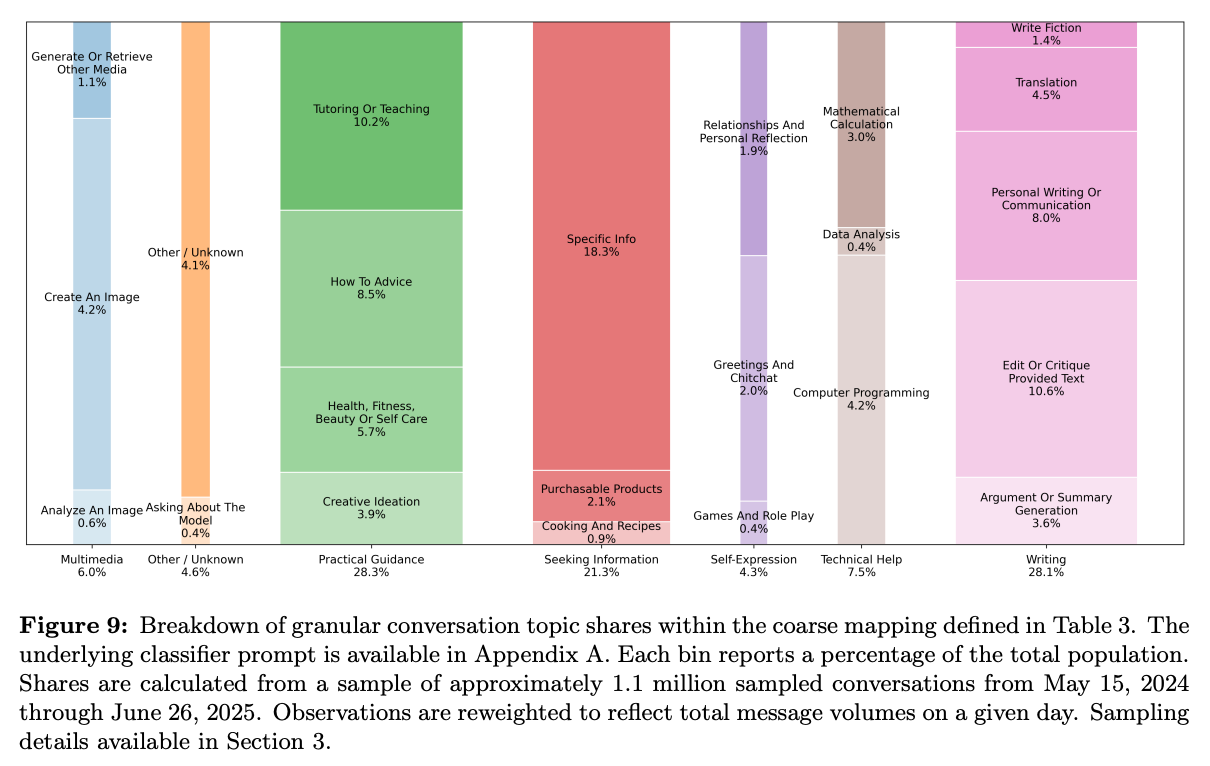
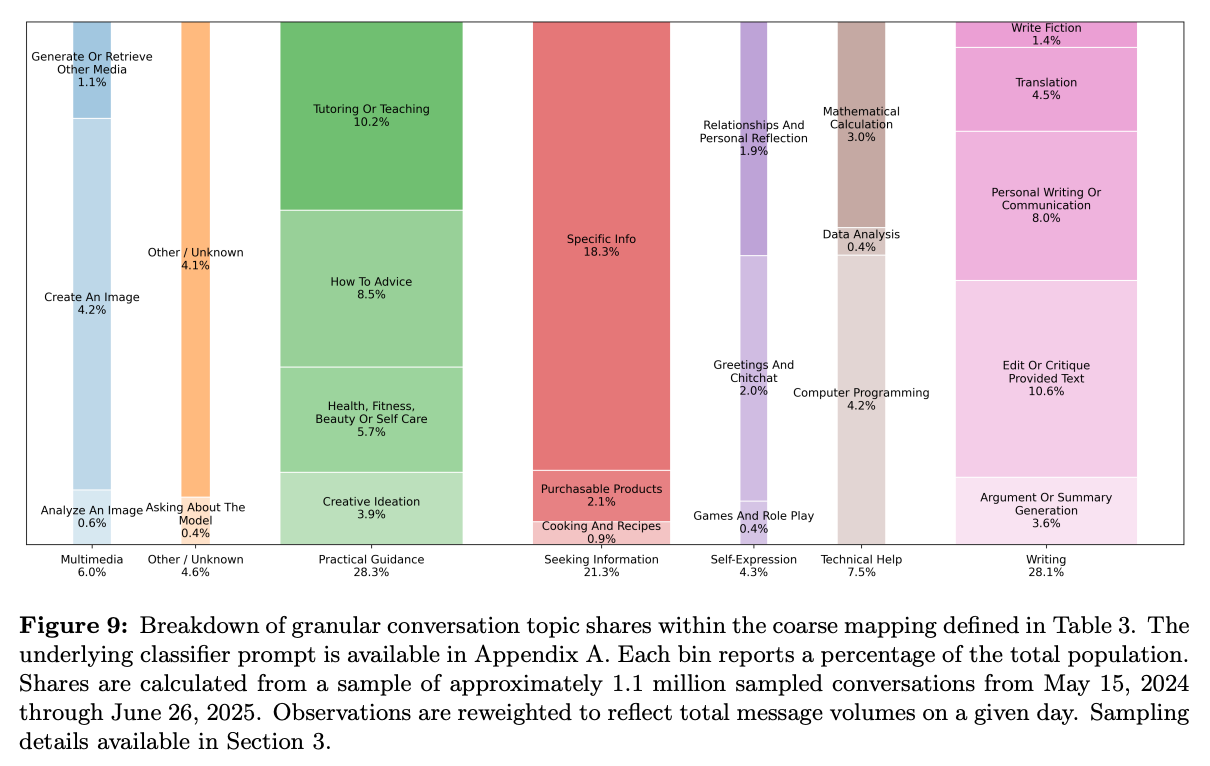
Maybe i’ll do a breakdown of this paper: how people use ChatGPT — its super detailed, and a reminder that all this data is open. You’re better off not putting your confidential emails or exporting your telegram messages to get help drafting a response.
SF tech bros are woking 996 - 9am to 9pm, 6 days a week for those of you who are not terminally online. I refuse to believe longer hours = better output
The percentage of Americans saying college is "very important" has fallen to 35%
Honey Deuce US Open sales reach $12.8m This is a 23.5% increase in sales, I guess everyone wanted to take that instagram photo
The youngest Emmy winner in any male category: Owen Cooper. ‘‘Three years ago, I was nothing’’ — he was 12. I love seeing young people do cool things
you have an exceptional talent in explaining complex technical things to non-technical people, keep writing, please🌻